Thursday, December 24, 2015

TV Land's big mistake

whosdebateisitanyway

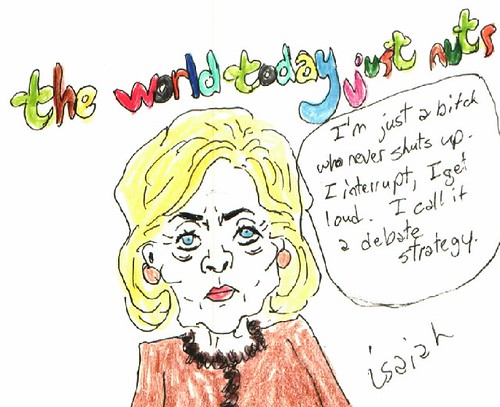
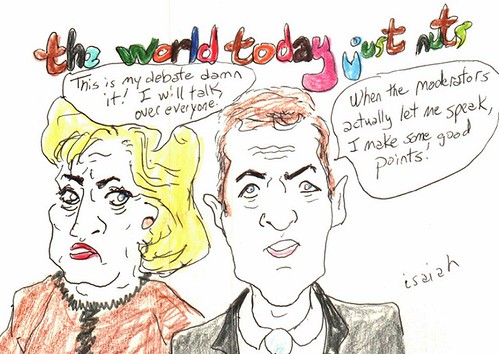
That's Isaiah's  "Who's Debate Is It Anyway?" about the Democratic Party debate.


Now what has been the biggest bonehead move by TV in recent years?

I'd go with TV Land's decision to cancel Hot In Cleveland.

The show was a hit.

Had just made it into syndication.

And the new TV series that TV Land was developing were crashing and they decide to cancel their only hit?

Do they realize how much more money they could have made in syndication with even just one more season?

Hot In Cleveland was also a very funny show.


This is C.I.'s "Iraq snapshot:"


Wednesday, December 23, 2015.  Chaos and violence continue, the Ramadi effort has already hit a snag, the Islamic State is popular in Mosul, Barack Obama finally weighs in on the persecution of Iraqi Christians, and much more.


Susanna Capelouto and Hamdi Alkhshali (CNN) note, "Iraq's military is just a half-mile away from the ISIS-held government compound in Ramadi in Iraq's battle to retake the city from the terrorist group, the head of Iraq's joint forces said on state television."  Maher Chmaytelli (REUTERS) adds, "Iraq's army chief was quoted on Wednesday as saying he needed only days to drive Islamic State from Ramadi, the city whose fall in May exposed the weakness of the Baghdad government and dampened hopes of restoring control in the north and west."


But the march to success, as has repeatedly been the case so far, hit a bit of a snag.

 Ghassan Adnan and Matt Bradley (WALL ST. JOURNAL) report:

A new push by Iraqi forces to retake Ramadi appeared to stall Wednesday in the face of resistance from Islamic State fighters, a day after government troops made quick progress toward the center of the strategic city just 60 miles from the capital.
By Wednesday afternoon, Iraqi forces had paused within 800 yards of a former government compound in the city center that they are aiming to recapture, said Gen. Talib Sheghati, head of Iraq’s Joint Operations Command which coordinates with the U.S.-led coalition battling Islamic State.

Gen. Sheghati said the Iraqi forces were working to defuse bomb-rigged homes and buildings, land mines and improvised explosive devices buried under roadways.


The Iraqi forces vastly outnumber the Islamic State in Ramadi.

But even that's not apparently enough to get them to press forward.

This morning,  Falih Hassan and Kareem Fahim (NEW YORK TIMES) reported that even more Iraqi troops are being sent to Ramadi (yesterday, there were 10,000 -- for the 350 Islamic State fighters) and that, according to US military spokesperson Col Steven Warren, "there had been no significant developments in the battle to reclaim the city."


All of those forces, a bridge via the US and bombings from war planes?


Still not enough, apparently.


Today, the US Defense Dept announced:


Strikes in Iraq
Attack, bomber, fighter and remotely piloted aircraft conducted 24 strikes in Iraq, coordinated with and in support of Iraq’s government:

-- Near Huwayjah, one strike struck an ISIL tactical unit.

-- Near Habbaniyah, five strikes struck four ISIL staging areas and an ISIL headquarters.

-- Near Mosul, eight strikes struck six separate ISIL tactical units and destroyed an ISIL building, an ISIL crane, an ISIL bulldozer, two ISIL excavators, two ISIL vehicles, five ISIL fighting positions, an ISIL heavy machine gun, an ISIL light machine gun and an ISIL checkpoint and wounded an ISIL fighter.

-- Near Ramadi, four strikes struck two separate ISIL tactical units and destroyed an ISIL bunker, 19 ISIL fighting positions, three ISIL sniper positions, an ISIL anti-air artillery piece, four ISIL rocket-propelled grenade positions, two ISIL recoilless rifles, two ISIL grenade launcher positions, two ISIL heavy machine gun positions, three ISIL command-and-control nodes, two ISIL bed-down locations, an ISIL staging area, cratered an ISIL-used road and denied ISIL access to terrain.

-- Near Sinjar, one strike struck an ISIL tactical unit.

-- Near Sultan Abdallah, one strike struck an ISIL tactical unit and destroyed an ISIL fighting position.

-- Near Fallujah, one strike destroyed an ISIL bunker.

-- Near Kisik, two strikes struck two separate ISIL tactical units and destroyed three ISIL fighting positions.

-- Near Tal Afar, one strike struck an ISIL tactical unit.

Task force officials define a strike as one or more kinetic events that occur in roughly the same geographic location to produce a single, sometimes cumulative, effect. Therefore, officials explained, a single aircraft delivering a single weapon against a lone ISIL vehicle is one strike, but so is multiple aircraft delivering dozens of weapons against buildings, vehicles and weapon systems in a compound, for example, having the cumulative effect of making those targets harder or impossible for ISIL to use. Accordingly, officials said, they do not report the number or type of aircraft employed in a strike, the number of munitions dropped in each strike, or the number of individual munition impact points against a target.


Those war planes, bombing non-stop since August -- of 2014!  And achieving so little -- so little that some might even argue they've achieved nothing.


in the terminal where dreams
let so many tickets through
when strangers look in faces
and see somebody there they knew
you might meet me tomorrow
as all the lights are blooming green
and you're feeling a little lonely,
a little sad, a little mean
remember a place
inside of that hotel
where you could do anything you want to do
you couldn't tell
If it's more trouble than it's worth
ah, this is more trouble than it's worth
-- "Living It Up," written by Rickie Lee Jones, first appears on her album Pirates


More trouble than it's worth?

Absolutely.

June 19, 2014, US President Barack Obama insisted that Iraq's crises required a political solution.  But he's refused to address that issue.  He's poured everything into a military approach and ignored diplomacy.


And there's been no real advance.


Ruth Pollard (SYDNEY MORNING HERALD) explains:


 Even if Iraqi forces were to reoccupy all of the areas now controlled by IS and the Syrian city of Raqqa – now its unofficial capital – was liberated, without serious reform a group like the IS and all the chaos it causes will just re-emerge from the ashes, warns says Zaid al-Ali, an Iraqi lawyer and author of the book The Struggle for Iraq's Future.
"Without serious security sector reform and serious justice sector reform in Iraq there is absolutely no point engaging in any of these initiatives," says Ali, also a visiting lecturer and fellow at Princeton University.
Instead of dealing with the threat of Islamic State militants by undertaking military and police operations based on good intelligence, Iraqi forces were randomly rounding people up, arresting them and forcing them to pay bribes to get out.
"The justice system is equally shambolic … in most cases the most senior leadership of [IS] get away scot free while the people who cannot afford to pay bribes are left behind," Ali says.


The government's persecution of the Sunnis is why the Islamic State got its foothold in Iraq to begin with.  As world governments ignored the targeting of Sunnis, the only group that appeared to stand up for them was the Islamic State.


Whis is why Shane Dixon Kavanaugh (VOCATIV) reports:


Research published by IIACCS, a reputable polling firm in Iraq, shows that support for ISIS among residents living in Mosul, the nation’s second-largest city, has steadily increased since it fell to the terror group 18 months ago. The survey also found that residents’ doubts about the Iraqi Army, and about the aggressive anti-ISIS air campaign led by the United States, are lingering.
Nearly 40 percent of people surveyed said ISIS represents their views and interests. That’s up from just 10 percent in June 2014, the month the militants seized control of the city. Around 34 percent of participants said that they now support the Islamic State’s self-declared caliphate and 39 percent would like jihadists to maintain control of Mosul.


You have to address the root causes.  If you don't, you will never defeat the Islamic State.


Embedded image permalink


Children carry through the streets
A brilliant painted star
Angels gather 'round the hearth
Strumming on guitars
Men of great renown and faith
Say prayers on boulevards
It's the night before Christmas
But you don’t have to be an angel
To sing harmony
And you don't have to be a child
To love the mystery
And you don’t have to be a wise man
On bended knee
The heart of this Christmas is in you and me
The night before Christmas
The night before Christmas 
-- "The Night Before Christmas," written by Carly Simon, first appears on the soundtrack for Nora Ephron's THIS IS MY LIFE


On this topic, Saif Hameed (REUTERS) reports:

With Christmas falling this year a day after Prophet Mohammad's birthday, the city of Baghdad is holding Christmas celebrations in a sign of brotherhood with Iraq's hard-pressed Christian community.
Fireworks will illuminate the Tigris river every night of the week and a 25-metre (82 feet) Christmas tree has been set up in Zawraa public park. In Zayuna camp, in the east of the city, children listened to Christmas carols on Wednesday and danced with Santa Claus to Iraqi songs. 


And about there, reporting ends and whoring begins.

They're all whoring.  One outlet after another.

The Islamic State, we're told has destroyed life for Christians in Iraq.

They apparently believe news consumers are so stupid that they can't remember a year ago or two.

Every year, the press has reported how difficult things are for Iraqi Christians.

Long before the Islamic State emerged, the troubles were via Shi'ite militias.


Barack has long been accused of avoiding the persecution of Iraqi Christians -- among others.  But this year, he issued a statement.


The White House
Office of the Press Secretary
For Immediate Release

Statement by the President on Persecuted Christians at Christmas

During this season of Advent, Christians in the United States and around the world are preparing to celebrate the birth of Jesus Christ.  At this time, those of us fortunate enough to live in countries that honor the birthright of all people to practice their faith freely give thanks for that blessing.  Michelle and I are also ever-mindful that many of our fellow Christians do not enjoy that right, and hold especially close to our hearts and minds those who have been driven from their ancient homelands by unspeakable violence and persecution.
In some areas of the Middle East where church bells have rung for centuries on Christmas Day, this year they will be silent; this silence bears tragic witness to the brutal atrocities committed against these communities by ISIL. 
We join with people around the world in praying for God’s protection for persecuted Christians and those of other faiths, as well as for those brave men and women engaged in our military, diplomatic, and humanitarian efforts to alleviate their suffering and restore stability, security, and hope to their nations.  As the old Christmas carol reminds us:
The Wrong shall fail,
The Right prevail,
With peace on earth, good-will to men.


So there you have it, when he can't blame the persecution on the Islamic State, he has nothing to say.  When he can blame it on IS, he rushes to finally weigh in.


Changing topics, Taylor Weatherby (HOLLYWOOD LIFE) notes:


Congrats are in order for Shaima Qassem Abdulrahman! The 20-year-old student was recently crowned Miss Iraq, becoming the first to receive the honor since 1972. But as her country is facing some turmoil, Shaima’s win comes with several death threats for her involvement with the competition. Despite the scary circumstances, the newest Miss Iraq is hopeful that her title will have a positive affect on all Iraqi women.


Kate Storey covers the for ELLE here.  Faisal Al Yafai (THE NATIONAL) finds the whole thing to be a sham and offers:


It is a country where, while young Iraqis walk down a catwalk, it is still unsafe for women (and men) to walk down the street.
Where the number of women in work has plummeted since the US invasion. Where female political representation, though mandated by law, is contorted by political parties. Where the legal system cannot provide justice for the crimes committed against women by both Iraqis and Americans.
It isn't clear how any of those issues will be progressed by young girls wearing nice clothes and parading on a stage in front of judges. Nor is it especially clear how their doing so constitutes a “celebration of life”.


Wednesday, December 23, 2015

Jodie Foster films

hillarysdebatestrateg


That's Isaiah's   "Hillary's Debate Strategy."  I'll note the other two later this week.

What is SheWired thinking?

Five Jodie Foster films that you can't miss?

I love Jodie.

She's got way more than five such films.

But the five they choose?

The Accused?

If you want to pick that for Jodie's acting, go for it.

But don't pretend it's a great movie.

Jodie elevates it above TV movie -- but just barely.

It's not a real movie.

Nor is her Home For The Holidays film -- which she directed (and if I got the title wrong, I don't care).

Contact is a good film.

It's also not one of her better performances.

I agree with Panic Room but would argue that's one of three of her paranoia flicks that have to be seen -- the other two being The Brave One and Flight Plan.

How do you leave off her Spike Lee film?

Inside Man is a classic, is a real film and has a great performance from Jodie.

Silence of the Lambs is also not included.

Nor is Freaky Friday.

Nor Bugsy Malone.


I get it, Jodie has a ton of great films.

But the five they chose included at least 2 real turkeys.


This is C.I.'s "Iraq snapshot:"


Tuesday, December 22, 2015.  Chaos and violence continue, Ramadi is supposedly on the verge of liberation or 'liberation,'  Hillary Clinton's desire for a no-fly zone over Syria gets a robust reply, and much more.


What I'm trying to say is
It's time 
To get in the way
It's crazy 
That this thing is still going on
I can't believe
This thing's still going on 
And it goes
Na na na na na na 
I hate the war
Na na na na na na 
I hate the war
Na na na na na na
I hate the war
-- "I Hate The War" (written by Greg Goldberg, on The Ballet's Mattachine!)


This morning on CNN, reciter Barbara Starr made an ass out of herself with a recitation of factoids about Iraq which included 500 Islamic State fighters were thought to be holed up in Ramadi and that Haider al-Abadi, prime minister of Iraq, had amassed 10,000 troops to take them on as the Iraqi forces finally may be about to enter Ramadi (the last five months have been non-stop failure for them in this mission).  [In a report on CNN in the afternoon, she dropped the number of Islamic State fighters in Ramadi to 350.]  She failed to note how ridiculous the odds yet again were -- 20 Iraqi forces for ever Islamic State member and though she was eager to note that there was resistance in Iraq to US forces, she failed to pin down where that resistance comes from.

Iraqi Prime Minister Haider al-Abadi has signaled to the US government that he himself is willing to have US forces on the ground in combat.  He's also said this would be a hard sell.

Why?

Kurds?

Are the Kurds wanting the US out of Iraq?

Nope.

Okay, then the Sunnis?

Nope.

The Sunnis have been wanting more US involvement for years now.

The why of that goes to the hard sell.

Sunnis have argued more US involvement could end the persecution of the Sunnis.

Persecution by whom?

Hard line, radical Shi'ites.

Such as the one who leads the Bard terrorists -- popularly referred to as the Badr militia or Badr brigade.

(And let's all pretend we've never heard of the Badr brigade's death squads.)

I don't want US troops on the ground in Iraq.

And reasons for that desire include that this is Iraq's battle and the US government needs to stay out of it (and stop propping up the figure head government that they have imposed).

But Shi'ites like Bard terrorist leader Hadi al-Amiri don't want US forces on the ground for a different reason.

Their actions in 'liberated' areas have been destructive -- to put it mildly.

They have carried out attacks on Sunni civilians in the name of 'revenge' (the Islamic State is a Sunni organization).  They have burned Sunni homes, they have looted.

And they have killed for sport.
As Kirk H. Sowell noted in August at Carnegie Endowment for International Peace:
Badr—founded in the 1980s in Iran, its continued supporter—is not only the most important of the various armed groups composing the Popular Mobilization Forces (Hashd). It also symbolizes how Iraqis’ hopes for a democratic country governed by the rule of law have given way to a political system that is expressly sectarian and increasingly resembles a garrison state. No other militia-political party was better prepared to capitalize on the collapse of Iraqi security forces in northern Iraq last June. Badr’s military commander, Ameri—who tried and failed to get an appointment as minister of defense or interior, in part due to U.S. opposition—has been transportation minister since Maliki’s second cabinet and is now a parliamentarian. Under the new government of Haider al-Abadi, Ameri was able to get a member of his party, Mohammed Salem al-Ghabban, confirmed as interior minister. Prior to leaving office, Maliki had made Ameri the military governor of Diyala—an informal appointment usually described euphemistically as al-masuul al-amani (the security official)—which he remains to this day.
Ameri, now on leave from parliament, has captured far more renown in his militia commander role than he ever did as a cabinet minister. In October 2014, Ameri was often described as the “leader” of the militia-led offensive to subdue Jurf al-Sakhr, a mostly Sunni area south of Baghdad, and consolidate Shia control around the capital. By February 2015 Badr had secured Diyala, whose narrow Sunni Arab majority is nestled between Baghdad and Iran. Badr and other militias sustained criticism that they were engaging in retribution attacks and attempting to cleanse the Sunni population from these areas. But the ministry of human rights—also held by a Badrist, Mohammed Mahdi al-Bayati—sent a senior official to speak at Badr’s February 16 celebration of their victory in Diyala and defend the conduct of the Badr-led Hashd.
Ameri’s military preeminence continued in March with the launch of the operation to liberate Tikrit and northern Salahuddin. Iran, through Badr, initially played more of a role in the offensive than Iraqi leaders did, and photos of the infamous Quds Force commander Qassem Soleimani sometimes appeared alongside Ameri himself, dominating media coverage. Yet the militia-led offensive was forced to step back from Tikrit to let the U.S.-led international coalition conduct airstrikes against dug-in jihadis, allowing the formal security services—army and federal police—to lead the liberation of the city. Although Prime Minister Abadi initially held back the militias in Anbar out of fear of sectarian conflict, he gave way after the security forces defending the provincial capital of Ramadi collapsed on May 17. Ameri promptly took the lead as “field commander” of the new Anbar offensive, only to decide in early June—apparently entirely on his own—to shift focus to Fallujah, which lies between Ramadi and Baghdad. 
The videos of abuse are all over the internet.

Briefly, they were of momentary interest -- remember that?
No?
From the March 23rd snapshot:

ABC News aired an important report March 11th and a second one March 12th. March 12's report is transcribed below:


David Muir: Now to new fall out after our ABC investigation last night. It involves the fight against ISIS known for those awful videos, lining up their victims on the beach.  And now a new concern.  Are some of the Iraqi forces -- trained and paid for by US taxpayers -- using techniques that are just as brutal?  Well the State Dept tonight responding to our report and ABC's chief investigative reporter Brian Ross back on the job tonight.

Brian Ross:  The State Dept called these scenes today serious and disturbing.  Brutal images of what appear to be Iraqi forces and militias carrying out, celebrating, torture and beheadings.  In this torture scene, two US weapons against the wall. This video shows two civilians, pleading for their lives, about to be shot dead.  A man with an American supplied weapon walks by, a gunman with what appears to be the insignia of Iraqi Special Forces caught on tape.

US State Dept spokesperson Jen Psaki: Their behavior must be above reproach or they risk being painted with the same brush as ISIL fighters.


Brian Ross:  The Pentagon says it has already cut off money to some Iraqi units because of gross human rights violations.  But Senator Patrick Leahy says the ABC News report shows the government should cut off money to more Iraqi units.

Senator Patrick Leahy: When you look at at the videos and look at the uniforms being worn, do we really want to say the US condones that?

Brian Ross: US officials tonight tell ABC News that America's top military leader Gen Martin Dempsey, the Chairman of the Joint Chiefs, has repeatedly warned Iraqi leaders about the conduct of the Iraqi military and the militias that fight with them -- especially because the US is sending $1.5 billion to the Iraqi army and almost 3,000 American troops to help train them.


ABC News was reporting on them much to the displeasure of the White House -- and then the story was disappeared.


It popped up today on CNN's THE LEAD WITH JAKE TAPPER when Jake spoke with US House Rep Tulsi Gabbard, an Iraq War veteran:


Jake Tapper: Congresswoman Gabbard, thanks for joining me.  ISIS took control of Ramadi in May, as you know, that was an embarrassing defeat for the Iraqi army.  If Iraqi forces do succeed in retaking Ramadi this time around, are you confident that this time they can keep ISIS out?


US House Rep Tulsi Gabbard:  Jake, I think it's too early to tell, quite frankly.  I think a lot's going to depend upon how the people there are treated by the occupying forces that will remain there after this battle is won  And that's a key thing that we've got to focus on here because we've seen in previous battles, as you've mentioned, with other cities, where the battle has been won but you've seen how the sectarian tensions have been completely gotten in the way, how the people there in these Sunni communities were persecuted and it allowed the space for ISIS to come back in and take over.


Jake Tapper:  The Pentagon says that the only role the US military is playing in this attempt to retake Ramadi is air support.  Should US troops being doing more?  Maybe on the ground hunting and killing ISIS fighters?

US House Rep Tulsi Gabbard:  Well I think generally what I have long called for is having these hubs throughout the region in different places where our special forces can operate from and conduct quick strike attacks against ISIS, al Qaeda and these other Islamic, extremist groups there in Iraq.  It's going to be critical -- especially in these Sunni communities that you empower the Sunni tribes -- that you equip them and you arm them so that they can fight these fights and then, more importantly for the longterm, that you have a plan in place to govern and secure these territories.  And this is why I've long called for a three-state solution -- arming and empowering the Kurds in the north, the Sunnis and the Shia, and having some form of a three-state semi-autonomous or autonomous region.  And I think similar is what's needed in Syria as well.

Jake Tapper:  Former Secretary of State Hillary Clinton said, during the Democratic debate, we are where we need to be in the fight against ISIS.  Are we?


US House Rep Tulsi Gabbard:  I would heartily disagree with that.  We've got a strategy that's being executed that frankly doesn't make a whole lot of sense.  I've been calling for an end to the counter-productive, illegal war to overthrow the Syrian government of Asad and very clearly talking about how dangerous a no-fly zone in Syria would be.  We heard the President talk the other day about his opposition to a no-fly zone but at the same time we've heard from many of our presidential candidates how they're advocating for a no-fly zone.  I don't see how your head can be screwed on straight if you're pushing for a no-fly zone.  When we hear people like Chris Christie and Marco Rubio saying that they would shoot down a Russian plane that violates that no-fly zone kicking off a US - Russia war, kicking off an escalation to a world war or a nuclear war.  This is something that points to a very important issue which is the fact that our political leaders are not operating with a military mindset.  This is something that I and other young officers in the military learn early on in the military and that is that before you go out and execute a certain course of action, you've got to look at what are the consequences?  How will your enemy -- or other actors -- react to that course of action?  And, once they react, how will you -- what will your response to that be? And then what will their response to that be?  And continue to go down the line, layer by layer.  So if you look at what's happening in the Middle East now, the mess that we're in today, can be pointed directly, starting with the Bush administration, continuing today, with that lack of military mindset, that lack of foresight -- whether you're talking about overthrowing Saddam in Iraq, Qaddafi in Libya, the Arab Spring, [Hosni] Mubarak in Egypt and now Assad in Syria. 


Gabbard noted the persecution of the Sunnis.

Why can't Starr?


Today, Daniel Victor (NEW YORK TIMES) notes, "A new Miss Iraq was crowned in Baghdad for the first time since 1972 in a contest that faced fierce conservative opposition as well as reported death threats against some participants."


gets first beauty queen since 1972
Embedded image permalink


gets first beauty queen since 1972
Embedded image permalink


As THE WEEK noted:


 The Miss Iraq beauty pageant has been held for the first time in over 40 years, despite death threats and the dangers of Islamic State.
Shaima Qassem Abdelrahman, 20, became the first woman to claim the title since the first and last Miss Iraq contest took place in 1972. The economics student from Kirkuk is now eligible to represent the country at the Miss Universe contest.


That's more than worth noting.

Both for the risks involved for all the contestants.

For the "X" is puts on the back of the winner Shaima Qassem Abdelrahman.

For the courage of all the contestants.

Salim Essad (CNN) explains:


The pageant website and its Facebook page were inundated with death threats against the women -- so much so that the nearly 200 participants dropped to less than 10.
In the end, Qasim, 20, an economics major at the University of Kirkuk, received her crown to the applause of a supportive audience cheering her on for prevailing against the odds.

It's a big moment.

And it takes a big moron to mess it up.


It takes an idiot -- in fact, it takes a lot of idiots.  Hello, Mycah Hazel whose stupidity is republished by HUFFINGTON POST (where else) as she argues that Miss Iraq is a bold slap in the face of ISIS:


Nevertheless, the 2015 Miss Iraq competition proves not only that there is potential for an Iraq that is above violence but that there are already Iraqi women promoting and working towards this goal, by representing their country even amidst threats of death. There are people beyond government leaders who are seeking to defeat ISIS, not with bombs, but with smiles of Iraqi pride -- smiles of stronger caliber than any AK-47.


As Winona Ryder tells Ethan Hawke in REALITY BITES. "You're bravado is embarrassing."

Here's a clue for Baby Cum Pants Hazel, next time stop using Iraq to whore for the Democratic Party.  You're need to bring up the GOP only
demonstrates your gross ignorance.

As does your xenophobic and condescending statements about Iraqi "pride."

Baby Cum Pants Hazel needs to grasp that Iraq was a haven in the region when it came to women's rights -- before the US-led invasion toppled Saddam Hussein.

She also needs to grasp that the US government put in charge Shi'ite thugs -- intentionally, a country in shock can't fight back -- who decimated women's rights.  That the prime minister until 2014, Nouri al-Maliki, appeased his Shi'ite thugs by refusing to nominate a single woman to his January 2011 cabinet of ministers.

She needs to grasp that the women he did embrace spoke out against women's rights and tried to impose dress codes.

She needs to grasp that Iraqi women have been fighting not only bullets and bombs, but the US-led destruction of their rights.

And, guess what, Baby Cum Pants Hazel?

None of the above  -- nor the beatings and rapes Iraqi women endured in prisons under Nouri al-Maliki -- was carried out by the Islamic State.

So buy a clue and sit your tired ass down.

You thought you had something to share.

You didn't.

Next time, grasp that Iraqi women are strong and don't deserve your xenophobia or your attempts to use them as pawns to attack the Republican Party.

Before you compose more slash fiction for the Democratic Party, you damn well better grasp that Iraqi women have been fighting the US occupation's attacks on their rights for years now.  They've taken to the streets to do so.  If that's surprising to you, maybe it goes to your own inherent weakness.


Today, the US Defense Dept announced:


Strikes in Iraq
Attack, fighter, bomber, and remotely piloted aircraft conducted 17 strikes in Iraq, coordinated with and in support of the Iraqi government:
-- Near Fallujah, two strikes struck an ISIL tactical unit and destroyed a bomb-making facility and wounded two ISIL fighters.
-- Near Kisik, a strike suppressed ISIL rocket fire.
-- Near Mosul, seven strikes struck six separate ISIL tactical units and destroyed an ISIL building, 12 ISIL fighting positions, an ISIL heavy machine gun, two ISIL vehicles, five ISIL bunkers, and seven ISIL assembly areas.
-- Near Qayyarah, a strike destroyed an ISIL excavator.
-- Near Ramadi, six strikes struck two separate ISIL tactical units, denied ISIL access to terrain, wounded two ISIL fighters and destroyed four ISIL command and control nodes, four ISIL weapons caches, two ISIL buildings, and an ISIL vehicle bomb.

Task force officials define a strike as one or more kinetic events that occur in roughly the same geographic location to produce a single, sometimes cumulative, effect. Therefore, officials explained, a single aircraft delivering a single weapon against a lone ISIL vehicle is a strike, but so is multiple aircraft delivering dozens of weapons against buildings, vehicles and weapon systems in a compound, for example, having the cumulative effect of making those targets harder or impossible for ISIL to use. Accordingly, officials said, they do not report the number or type of aircraft employed in a strike, the number of munitions dropped in each strike, or the number of individual munition impact points against a target.


Last week, US war planes bombed (and killed) Iraqi forces -- by mistake.  And today?  REUTERS reports, "About 20 people, including at least 12 civilians, were killed on Monday in the northern Iraqi city of Mosul, in two air strikes that destroyed houses believed to be used by Islamic State militants, six eyewitnesses and a medical source said."


Friday, December 18, 2015

Well look who got paid off for services rendered

Did you see this?


"Information Clearing House" - "teleSUR" -   U.S. presidential candidate Hillary Clinton was also a favorite of the arms producing giants during her 2006 senate campaign.

Hillary Clinton has received more money from arms and military service companies than any other candidate during the 2016 presidential campaign, data from Open Secrets shows.
All but one of the world’s 10 biggest arms producers have contributed to Clinton’s previous campaigns, giving her — along with the top Republican receiver Ted Cruz — a significant margin over the other candidates.
The numbers, collected by the Federal Election Commission and compiled by Open Secrets, also reveal that Rand Paul and Bernie Sanders make the list of top 20 senators and top six presidential candidates to receive money from arms and defense companies.
Most of the funding is channeled through Political Action Committees, which have no limits to how much they donate. About 18 percent comes from individual contributions, totaling almost US$10 million between all of the companies.
The biggest donors — Lockheed Martin, Northrop Grumman and Boeing — devote about a third of their funds to Democrat candidates. In the last presidential elections, Barack Obama won more funding than his contender John McCain, though McCain is the top-earning senator this year. 


As Lily Tomlin says in 9 to 5, "Well look who got paid off for services rendered."


This is C.I.'s "Iraq snapshot:"


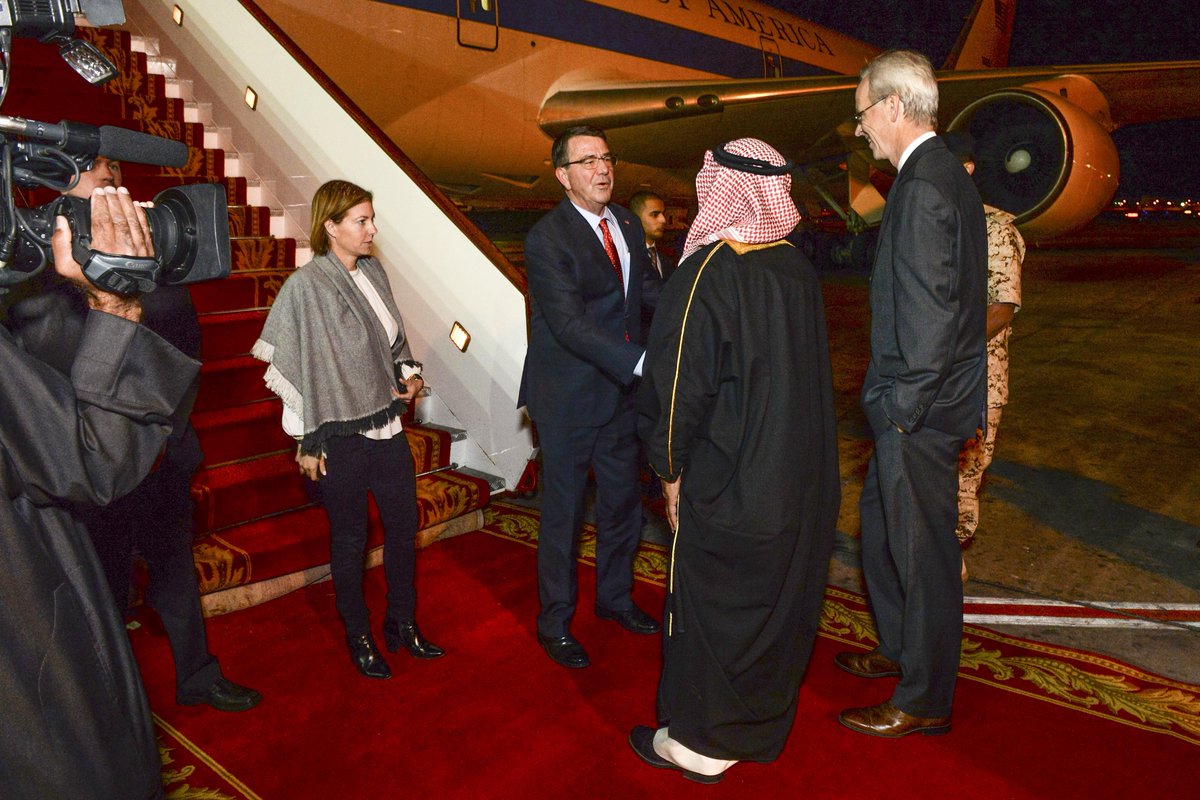
Thursday, December 17, 2015. Chaos and violence continue, US Secretary of Defense Ash Carter visits Iraq, and more.


Join in, to the tune of "Gidget Goes Hawaiian" (written by Stanley Styne and Fred Karger, originally sung by James Darren):


It's not the same
Down by the Arabian sea
Since Ash Carter went
South of Turkey

. . .


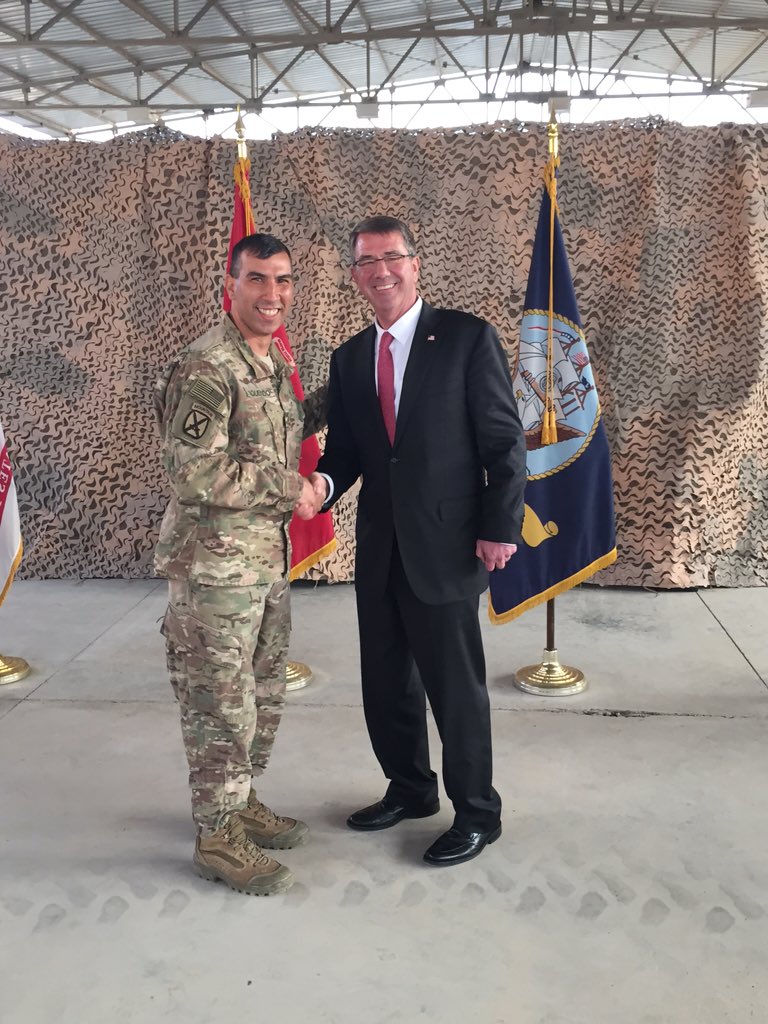
Follow Carter's travels in the at our web special here:
Embedded image permalink


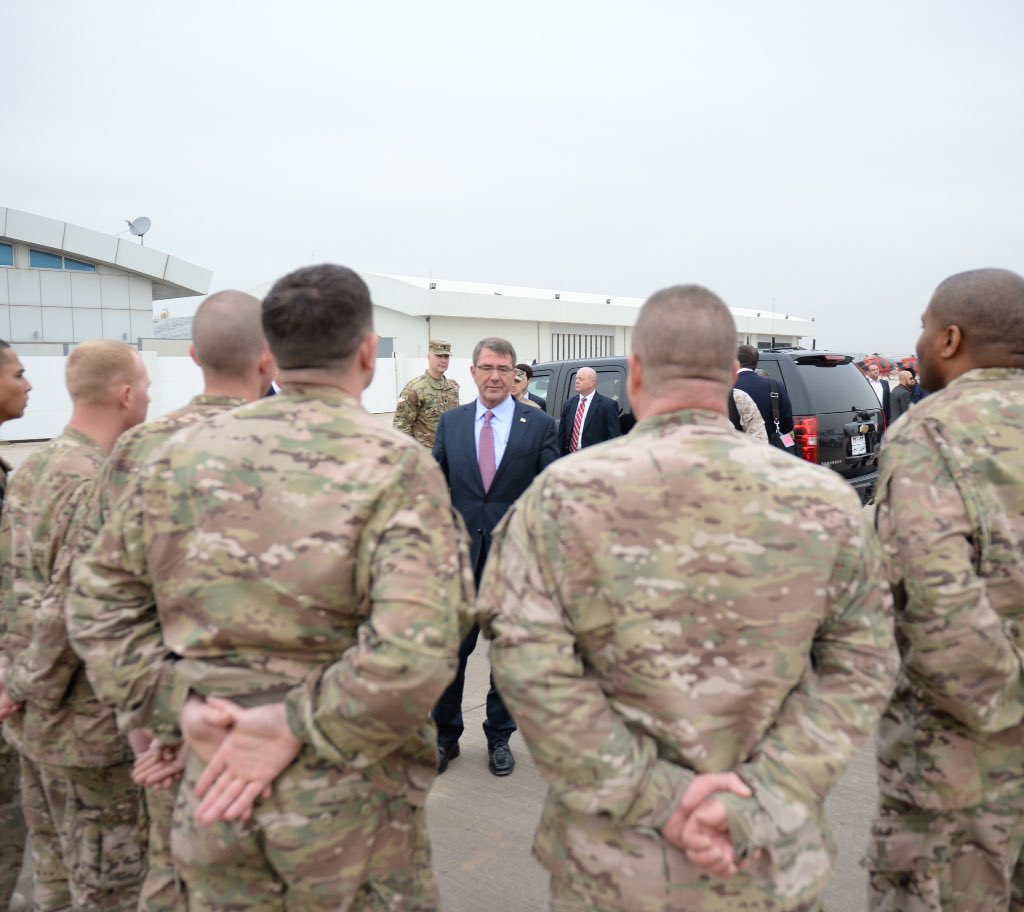
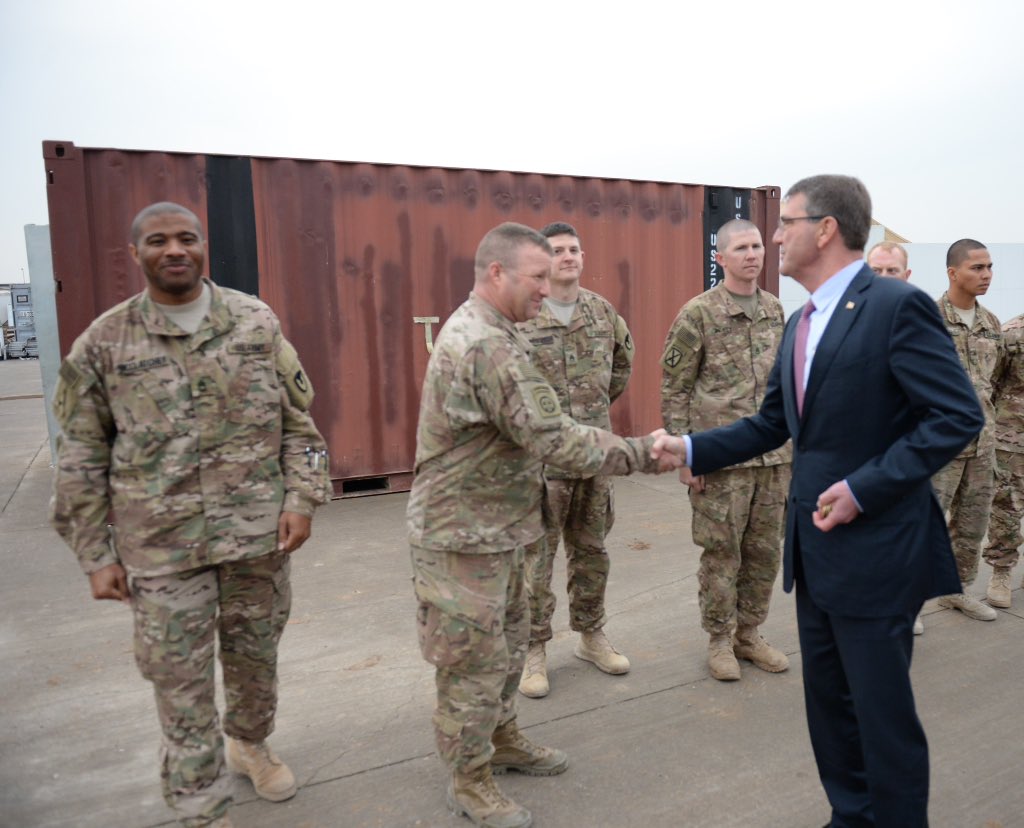
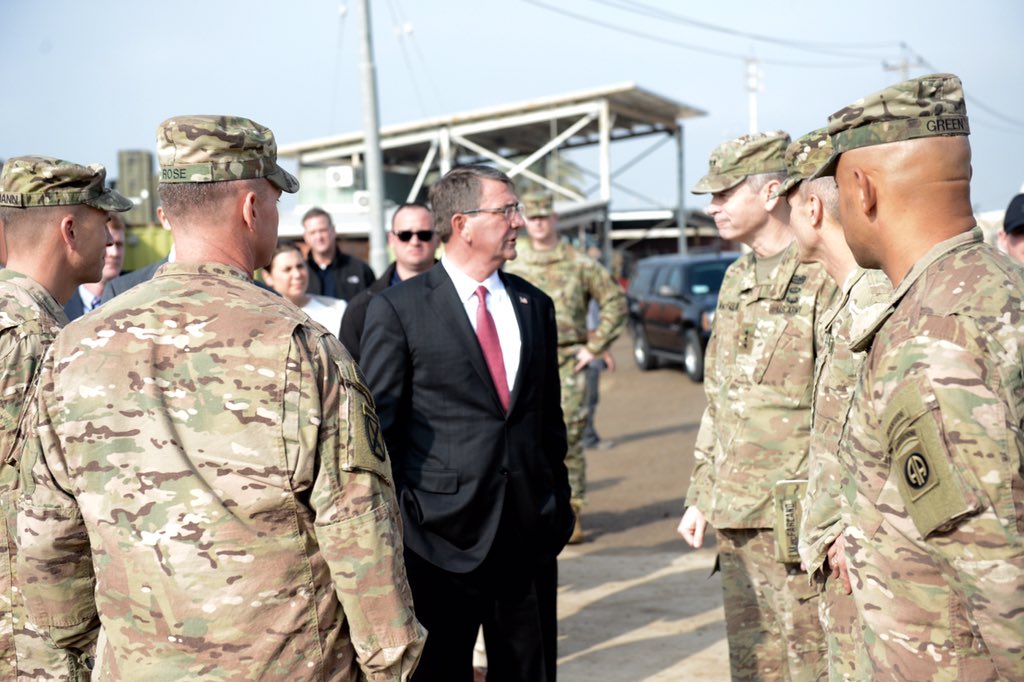
  1. Carter today thanked and coined troops serving in Baghdad during the holiday season
    Embedded image permalink

    Embedded image permalink


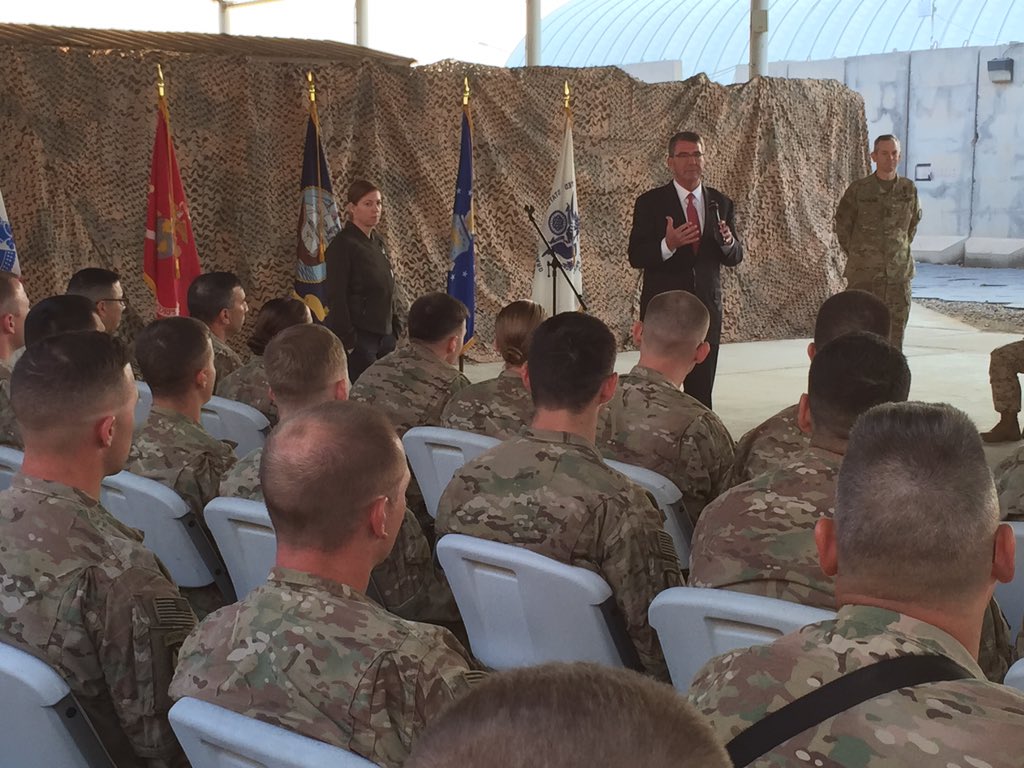
Speaking to the US troops, Carter declared, "This fight has to be fought.  It's for civilization against evil.  It's for America against its enemies. [. . .] We will win.  But we need to win quickly, and that in turn, is on you, your ingenuity."


Carter addresses troops in Baghdad, wishes them a happy holiday and thanks them for all they do
Embedded image permalink


Secretary Ash Carter (speaking in Baghdad): But whatever you call it, here in Iraq and also in Syria, we have to defeat it, we're going to defeat it, and we're looking for ways to up our game and hasten that demise of ISIL, here in Iraq, also in Syria.  And I should say, by the way, from the nature of our world today, and -- I call it sort of social media terrorism, that even though the parent tumor of ISIL is here in Iraq and Syria, it's like a cancer. It metastasizes around the world.  So, we're combating everywhere else, including at home. And we'll do that, and we have do that, but we have to take out the parent tumor, which is here in Iraq and Syria.  Here in Iraq, we do that by importantly supporting the Iraqi Security Forces. We have to build them, we have to help them be successful, we have to do more than we've been doing, as circumstances arise, and of course, subject to Iraqi approval.  But to help that -- I expect us to be doing more. And I told General MacFarland, we're looking for him to bring us ideas for how we can hasten this.  Now, obviously, a lot of it hinges on the performance of the Iraqis, and we need to help strengthen. But we need to have things that no other contributor can possibly bring.  And there are others around the world, other members of the coalition who can bring things to the fight -- and I'm talking to them about supporting the fight, too, because this has to be what it needs to be, which is a fight of the civilized world against this form of evil.  And since it is good versus evil, and it's the powerful, after all, in the end of day, it's us, the powerful and the many against the few.  We will win. But we need to win quickly, and that in turn, is on you, your ingenuity. And I'm here to help you, and there will be others joining the fight as well, both here in Iraq, and here in Syria.


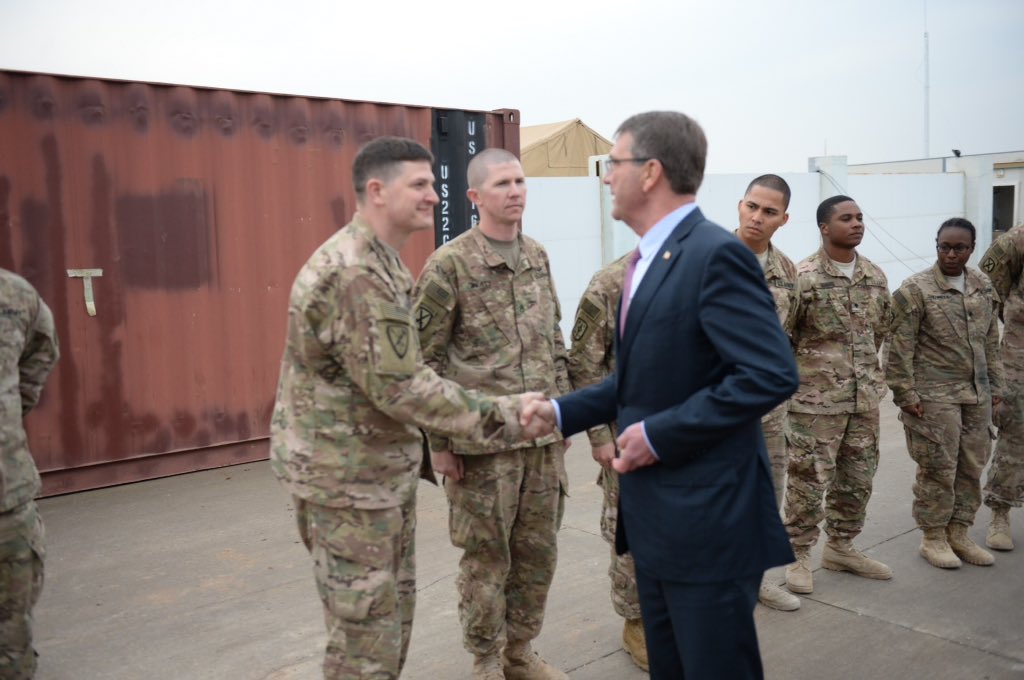
  1. Today visited troops in Erbil to thank them for the unique capabilities they bring to counter fight
    Embedded image permalink

    Embedded image permalink
    Embedded image permalink
    Embedded image permalink


Secretary Ash Carter (speaking in Erbil): The Kurdish Peshmerga have been exactly what we have been looking for in this whole fight in Iraq and Syria, namely a capable and motivated force that we can enable. I had an opportunity, first and foremost, to meet with our forces here, and by the way, if anybody wonders whether there are boots on the ground in Iraq, there are 3,500 boots on the ground, including some wonderful people here.  And in addition to telling them how much their country appreciates them at holiday time. Of course, our business was to talk about how to enhance our effective -- the effectiveness of the campaign here.  Let me start with the Kurdish side, if I could. I had a very productive meeting with President Barzani. I commended him on some -- a couple of items of recent performance of the Peshmerga. One was the taking of Sinjar, which was important because it separated the Iraqi-Mosul side of the theater from the Syrian-Raqqah side. So that was an important objective and that couldn't have been accomplished without them.  But also, and very timely here in Erbil, there was an attack by ISIL right here in the Kurdish region last night by ISIL -- an intense attack which shows you that ISIL intends -- it certainly showed the people who live here that ISIL intends to strike at them and can strike at them. And it also shows -- showed how effective the Peshmerga were because they repelled the attack. And it showed you especially how effective they were as -- when they were enabled, as they were, by our -- our forces here that advised them, and in particular called in air.  I discussed with President Barzani the future of the campaign, particularly the role that his forces could play in the encirclement and recapture of Mosul, the second-largest city in Iraq, an important objective where we need to help, and he affirmed we would get the help of the Kurdish Peshmerga.


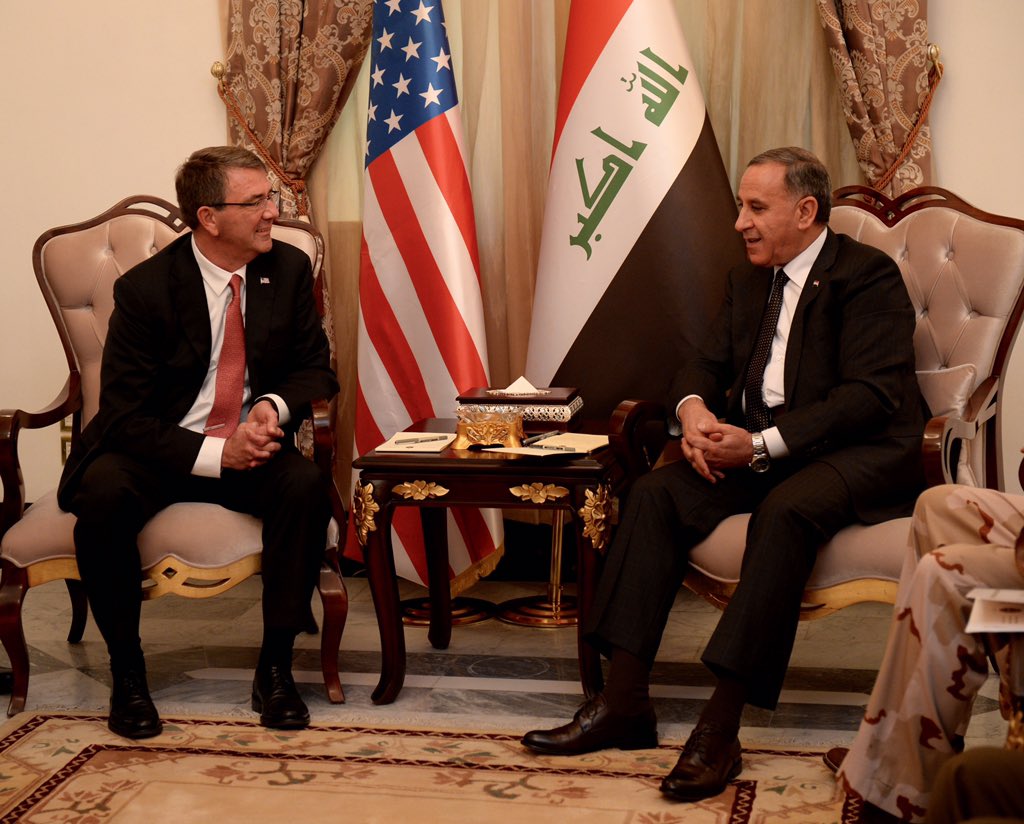
In addition to meeting with US and Kurdish forces, Carter also met with a few officials.


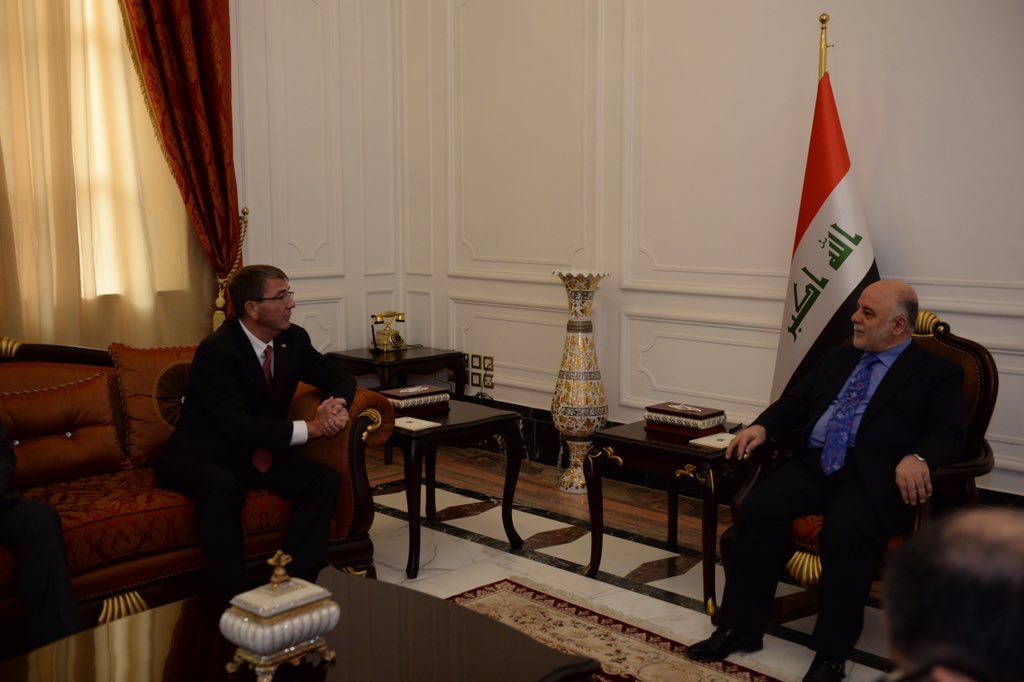
Carter met with Iraqi PM and MinDef to discuss the counter campaign
Embedded image permalink
 
Embedded image permalink


THE WASHINGTON POST's Liz Sly Tweeted:


  • Whether or not the proposal is off is unknown.  It is known -- or should have been -- that the US government was aware Haider al-Abadi was already making such statements for public consumption and that he had conveyed this in conversations with US Lt Gen Sean MacFarland before Ash Carter made his now infamous remarks in this month's Senate Armed Services Committee hearing.


    Secretary Ash Carter:  Turning to northern Iraq, Peshmerga units, with the help of U.S. air power and advisers, have retaken the town of Sinjar, cutting the main line of communication between Raqqa and Mosul, the two largest cities under ISIL's control. To move people and supplies, ISIL now must rely on backroads, where we will locate and destroy them. Elsewhere in Iraq, we have about 3,500 troops at six locations in support of Iraqi Security Forces, or ISF. There, we've been providing increased lethal fire and augmenting the existing training, advising, and assisting program. And we're prepared to do more as Iraq shows capability and motivation in the counter-ISIL fight and in resolving its political divisions. After a frustratingly long time, we are starting to see some movement in the operation to re capture Ramadi. Over the past several months, the coalition has provided specialized training and equipment -- including combat engineering techniques like in-stride breaching and bulldozing, and munitions like AT-4 shoulder- fired missiles to stop truck bombs -- to the Iraqi Army and counter-terrorism service units that are now beginning to enter Ramadi neighborhoods from multiple directions. In fact, in the last 24 hours, the ISF retook the Anbar Operations Center on the northern bank of the Euphrates River across from Ramadi's city center. This is an important step, but there is still tough fighting ahead. ISIL has counter-attacked several times, but thus far the ISF has shown resilience. The United States is prepared to assist the Iraqi Army with additional unique capabilities to help them finish the job, including attack helicopters and accompanying advisors, if requested by Prime Minister Abadi.


    We covered the hearing in the Wednesday, December 9th "Iraq snapshot," "Turkey's invasion and occupation of Iraq continues..." and in the Thursday, December 10th "Iraq snapshot" while Mike covered it in "So now attack helicopters" and "What is the plan?," Betty in "Joe Manchin is a sad US Senator," Wally at Rebecca's site with "Who knew Ash Carter was a fan of The Killers?," Ava at Trina's site with "Those shameful senators," Ann with "That posturing and preening Senate Armed Services Committee," Ruth with "Senator Blumenthal misses the point," Kat with "Disgusting 'answer' to the refugee crisis" and Elaine with "Senator Claire McCaskill is a pig."


    In Baghdad, on Wednesday, Carter took questions from the press.


    Q: (inaudible) -- clarification -- (inaudible). When you announced the -- (inaudible) -- last week to the Congress, you put it in the context of the Ramadi fight. Are you saying now that the use of American Apaches to support the Iraqi forces and their (inaudible) advisers -- (inaudible) -- level is -- are steps that are unlikely to happen during the battle of Ramadi and will be perhaps taken up for a future engagement?

    SEC. CARTER: They certainly might be taken up for a future engagement. And I am telling you that it's not either General MacFarland's judgment or the prime minister's judgment that they're needed right now for the completion of the fight in Ramadi. That does not mean that they wouldn't -- they won't make a difference sometime in the future.

    And so, the offer of the United States when circumstances suggest it, and subject to -- always to Iraqi approval, our willingness to do more, including the use of Apache helicopters. So that's the situation.

    (CROSSTALK)

    Q: Mr. Secretary, there is some reluctance among some Iraqis to have a larger U.S. or coalition footprint on the ground here in Iraq. Did you discuss that with either the minister or the prime minister? And what is their assessment of how much more they could accept?

    SEC. CARTER: We didn't discuss specifically, no, numbers. We did discuss the opportunity for the United States to do more. Now, you know, the ways that we uniquely contribute and can uniquely contribute to Iraqi battlefield success is by training Iraqi units, providing air support to Iraqi units, and possibly operating with Iraqi units to advise and do other things like that; not to replace them.

    So I don't think in any case that the numbers were a part of the conversation -- numbers, per se. But I just want to be clear, numbers aside, we were talking about the opportunities that will arise in the future to increase the American contribution to Iraqi success here, and both he and I anticipate that those circumstances will arise as Iraqi troops move north to Mosul, and we're prepared to increase our contribution.


    The US government has Lt Gen Sean MacFarland doing daily meetings in Iraq and they had Secretary of Defense Ash Carter visiting this week.

    The White House still, however, struggles to seriously work on the political aspect.

    Wednesday, December 16th in Baghdad, Carter did remark, "By the way, while I'm rattling on, I should say it's actually a whole-of-government too, because there's a political side to this, right, all these societies. And really importantly for us, there's a law enforcement, homeland security, intelligence, you know, my colleagues around the U.S. government matter in this, as well as everyone. That's a whole government approach."


    That's the only time he noted the political aspect.

    In fairness to Carter, he's the Secretary of Defense, not the Secretary of State.

    But it does underscore the lack of importance the White House has placed on diplomacy.


    Yes, June 19, 2015, US President Barack Obama insisted in public that only a political solution could solve Iraq's various crises.

    But it was just empty lip service as evidenced by the refusal to emphasize diplomacy.


    Repeatedly, Barack has acted as though the answer -- the one and only answer -- was military.


    In keeping with that one-note approach, the US Defense Dept announced today:


    Strikes in Iraq
    Attack, bomber, fighter and remotely piloted aircraft conducted 11 strikes in Iraq, coordinated with and in support of Iraq’s government:
    -- Near Fallujah, one strike struck an ISIL tactical unit and destroyed an ISIL sniper position, an ISIL tunnel, two ISIL heavy machine guns and an ISIL rocket-propelled grenade and wounded an ISIL fighter.
    -- Near Hit, one strike destroyed an ISIL homemade explosives cache.
    -- Near Kirkuk, one strike destroyed an ISIL excavator.
    -- Near Mosul, two strikes struck multiple large ISIL tactical units and three suicide bombers and destroyed 12 ISIL machine guns, 13 ISIL fighting positions, six ISIL vehicles and an ISIL vehicle bomb.
    -- Near Ramadi, four strikes struck three separate ISIL tactical units and destroyed an ISIL machine gun, three ISIL fighting positions, five ISIL buildings, three ISIL staging areas and an ISIL vehicle bomb.
    -- Near Sinjar, two strikes struck two separate ISIL tactical units and destroyed three ISIL fighting positions and an ISIL machine gun.

    Task force officials define a strike as one or more kinetic events that occur in roughly the same geographic location to produce a single, sometimes cumulative, effect. Therefore, officials explained, a single aircraft delivering a single weapon against a lone ISIL vehicle is one strike, but so is multiple aircraft delivering dozens of weapons against buildings, vehicles and weapon systems in a compound, for example, having the cumulative effect of making those targets harder or impossible for ISIL to use. Accordingly, officials said, they do not report the number or type of aircraft employed in a strike, the number of munitions dropped in each strike, or the number of individual munition impact points against a target.