The future of American democracy depends on our response to the legacy of Martin Luther King, Jr. And that legacy is not just about defending civil rights; it’s also about fighting to fix our rigged economy, which yields grotesque wealth inequality; our narcissistic culture, which unleashes obscene greed; our market-driven media, which thrives on xenophobic entertainment; and our militaristic prowess, which promotes hawkish policies around the world. The fundamental aim of black voters—and any voters with a deep moral concern for our public interest and common good—should be to put a smile on Martin’s face from the grave.
The conventional wisdom holds that, in the Democratic primary, Hillary Clinton is the candidate who will win over African-American voters—that her rival, Bernie Sanders, performed well in Iowa and won New Hampshire on account of those states’ disproportionate whiteness, and that Clinton’s odds are better in the upcoming contests in South Carolina and Nevada, two highly diverse states.
But in fact, when it comes to advancing Dr. King’s legacy, a vote for Clinton not only falls far short of the mark; it prevents us from giving new life to King’s legacy. Instead, it is Sanders who has championed that legacy in word and in deed for 50 years. This election is not a mere campaign; it is a crusade to resurrect democracy—King-style—in our time. In 2016, Sanders is the one leading that crusade.
Clinton has touted the fact that, in 1962, she met King after seeing him speak, an experience she says allowed her to appreciate King’s “moral clarity.” Yet two years later, as a high schooler, Clinton campaigned vigorously for Barry Goldwater—a figure King called “morally indefensible” owing to his staunch opposition to the Civil Rights Act of 1964. And she attended the Republican convention in 1968! Meanwhile, at this same moment in history, Sanders was getting arrested for protesting segregation in Chicago and marching in Washington with none other than King itself. That’s real moral clarity.
She's also a fraud who can't deliver on her empty promises.
It's very telling that she wants to 'listen' to African-Americans but there's no effort to even float one for her running mate.
Apparently having 1 bi-racial president means we never need an African-American on ticket.
This is C.I.'s "Iraq snapshot:"
Tuesday, February 16, 2016. Chaos and violence continue, the objection
to the Bushes continue, there's a new Judith Miller in town, and much
more.
THE GOOD NEWS.
Three kidnapping victims have been released. Dropping back to the January 21st snapshot for background:
There's a new development today in the kidnapping of three Americans in Iraq. In fact, there are two new developments. Background: Sunday, Mohammed Tawfeeq (CNN) broke the news that 3 Americans were missing in Iraq. Monday, CBS NEWS and AP reported, "A group of Americans who went missing over the weekend in Iraq were kidnapped from their interpreter's home in Baghdad, according to an Iraqi government intelligence official."
Today, Susannah George (AP) reports that "two powerful Shiite militias are top suspects" in the kidnapping: Asaib Ahl al-Haq and Saraya al-Salam.
Now from today's US State Dept press briefing moderated by spokesperson Mark Toner:
QUESTION: Do you have any more information about the Americans who were released in Iraq today? Specifically, was the U.S. involved in the investigation? Who were they?
MR TONER: I don’t, and I – and you heard my sigh when I – as you asked me that question, because I understand there’s a lot of interest in this story. First of all, we welcome the release of these individuals. I mean, it’s a huge relief; it’s a good news story. These folks are now on their way home, which is where they should be headed. I don’t – because of the Privacy Act restrictions – none of them signed a Privacy Act waiver, and I know that infuriates all of you. It infuriates me as someone who wants to convey information and talk about the work that was done behind the scenes, but I cannot. All I can say is that we are appreciative of and grateful for the Iraqi Government’s efforts to obtain the release of these individuals, but for any details, I’d have to refer you to them to speak to that.
QUESTION: Did Iran help at all, since it was brought up by the Secretary?
MR TONER: I know. I’m aware that he raised that and he acknowledged that. I just don’t have any more detail to offer. Sorry.
QUESTION: And can you – will you be able to say at one point who you believed was holding them, since there was, I think --
MR TONER: Sure.
QUESTION: -- public --
MR TONER: Speculation --
QUESTION: -- obfuscation of what the Iraqi police itself said were the prime suspects?
MR TONER: Again, I mean, the Iraqi Government is under no Privacy Act restrictions.
Michael.
From the good to the bad . . .
THE SCUM ALSO RISES. Look who's back, Bully's back. Bully Boy Bush. We ignore him. We go about our business thankful that he is no longer in the White House and thrilled to ignore him so long as he hides under his rock.
He's emerged.
To demonstrate that he's aged poorly, gained weight and, yes, is balding.
Dreaming of the pleasure I'm going to have
Watching your hairline recede
My vain darling
-- "Just Like This Train," written by Joni Mitchell, first appears on her COURT & SPARK.
And now he's out campaigning for his older brother Jeb who is seeking the GOP presidential nomination.
And Iraqis are weighing in, as Loveday Morris (WASHINGTON POST) reports:
"We are fed up with the Bush family, come on. No more Bushes, please," he said. He recalled George H.W. Bush's "betrayal" when he urged Iraqis to rise up against Saddam Hussein after the Gulf War in 1991 but then did not support them. The death toll reached the tens of thousands.
"Unfortunately they cheated us," Bayati said, adding George W. Bush was even more damaging in his handling of the fallout from the 2003 invasion. He says he has little faith that any president will improve things for Iraq.
"They have the problem as Iraq, the same faces coming again and again, the same families, Bushes and Clintons," he said. "They exported a copy of this system to us."
The Clintons?
Yes, it's hard to picture Iraqis being too excited over the prospect of a President Hillary Clinton.
Her husband presided over the death/murder of at least 500,000 Iraqi children due to his imposing sanctions.
And Hillary's gal pal Mad Maddie Albright, of course, infamously proclaimed the deaths were "worth it."
CHECK YOUR ZIPPER, YOUR BIAS IS SHOWING. If you want to be taken seriously as a news outlet, maybe you stop slanting the news? MEE 'reports':
Iraq's federal government will pay the salaries of the cash-strapped Kurdish region's employees if it halts its independent oil exports, Prime Minister Haider al-Abadi said on Monday.
Iraq's autonomous Kurdistan region, facing a financial crisis due to low oil prices, has announced its employees will receive partial salaries until further notice and that months of unpaid wages will be considered loans to the government.
So the Baghdad-based government has been sitting on the federal money they are supposed to distribute to the KRG and now we miss that fact?
The Constitution does not allow for Abadi to refuse to pay out the federal monies.
The issue of the oil? That can be resolved in a court of law.
The issue of distributing the federal monies is not in doubt.
Stanislav Ivanov (NEW EASTERN OUTLOOK) notes:
Besides, the central Iraqi government has been long sabotaging (in one way or another) the implementation of provisions of Article 140 of the Iraqi Constitution prescribing a peaceful resolution of situations with “the disputed areas.” They also refrain (using various excuses) from passing a new law on hydrocarbons and are being consistently late with the transfer of budget funds allocated for the development of the Kurdish region, sometimes they transfer insufficient funds and ignore the needs of Kurdish Peshmerga, etc.
And DEUTSCHE WELLE observes, "Transfer payments from the central government in Baghdad to the Kurdish regional government have been halted over a dispute. But the Kurdish region needs the money from Iraq as it cannot finance itself, especially because the budget has been strained by the battle against IS and care for refugees from affected areas."
Staying with the topic of the Kurds, let's drop back to Saturday's snapshot:
Liar and Barack's special envoy Brett McGurk appeared before Congress this week.
Special Envoy Brett McGurk: We will not put a timeline on when Mosul will be liberated, but shaping operations to lay the groundwork for isolating ISIL inside the city have now begun. Kurdish Peshmerga forces two months ago liberated Sinjar, cutting off a highway that feeds Mosul from Syria. This operation was launched simultaneously to the SDF taking al Hawl, and began the bifurcation of northern Iraq from Syria – making it harder for ISIL to move material and supplies. These constricting operations will continue, and set the stage for political efforts to organize and coordinate liberation operations. My visit to Baghdad last week focused on ensuring close cooperation between political leaders, as well as Iraqi Security Force and Peshmerga commanders. Thanks to the great efforts of our Department of Defense colleagues, and our Ambassador in Baghdad, Stu Jones, there is now a joint command center established east of Mosul to synchronize all of these efforts going forward. Mosul will not be a D-Day like assault. Nor will we announce when key events are to take place. But ISIL will feel increasing pressure inside this city -- day-to-day and week-to-week. This slow and steady suffocation is now underway. We are killing ISIL members inside Mosul every week. We are also uprooting their sustainment network and have destroyed the cash storage sites used to pay, recruit, and train their fighters.
In June of 2014, the Islamic State seized Mosul.
The Baghdad-based government has been in no hurry to rescue the citizens or liberate the city.
On the global stage, Baghdad has sported its cowardice for all to see.
McGurk was appearing before the House Foreign Affairs Committee on Wednesday. We covered some of the hearing in Wednesday's snapshot and in Thursday's snapshot.
We'll note this exchange.
US House Rep Paul Cook: Picking up on that question of the Turks and the Kurds, point blank, is there any hope for a separate homeland for the Kurdistan? I don' think geography favors it. But we've disappointed the Kurds so many times and after all of their fighting and everything else, particularly with the pressure with the Kurds -- I just don't . . . I think we're going to betray them once again. Can you comment on that?
Special Envoy Brett McGurk: Well the Kurds -- and I've dealt with my friends, the Kurds, in the Kurdistan Region of Iraq for almost a decade now. And you're right, there's a historical memory of what happened to the Kurds after WWI which is something I think we all have to recognize and be sympathetic to. Uhm, the Kurds in northern Syria we've developed a relationship with over the last 18 months or so in the counter-ISIL campaign. I was able to go into northern Syria last week and meet a number of them. And they have the same -- it's a very similar historical narrative. Uhm, however, at this moment in time, creating new, independent states is not something that I think would be particularly stabilizing. So when it comes to northern Iraq, and the Kurds, as I mentioned, I think before something like that can be discussed in a serious manner, first you have to get ISIS off the southern border, it's all jihad-istan on the entire southern border of northern Iraq and the Kurdistan region. Second, the economic situation has to stabilize. And, third, the political situation has to stabilize. So right now, I think the Kurds of northern Iraq, uh, and recognize this. Nobody is trying to do the impossible and create a unified Iraq that is a glowing democracy. But a federal Iraq, which is defined in their constitution, which empowers local leaders, empowers the Sunnis in the provinces, empowers the Kurds in northern Iraq, empowers the Shia in southern Iraq is something that's realistic, is something that is in Iraq's constitution and something that we support.
For those paying attention, it appears the Kurds are about to get stabbed in the back yet again. And, for the record, the Iraqi constitution also has a measure for independence but when provinces attempt to utilize that the US government suddenly has no interest in defending the country's constitution.
And for those paying attention, today's US State Dept press briefing and the remarks of spokesperson Mark C. Toner.
QUESTION: Iraq?
MR TONER: Iraq.
QUESTION: I have a question about the recent decision by the Kurdistan region’s President Barzani that the region is going to hold a referendum by November 2016. What is the U.S. Government position on that?
MR TONER: You’re talking about a referendum for Kurdish independence?
QUESTION: Yeah, self-determination.
MR TONER: Yeah. No, I mean, we’ve been very clear, and our policy remains unchanged. We support an Iraq that is unified, federal, pluralistic, and democratic.
QUESTION: Yeah, but I think we’re all aware of that. That’s not something new. But this is, like, new development. This is, like, almost happening. There is a specific date for that. And I think everybody – everybody knows that what the result of that referendum would be.
MR TONER: I mean, we – look, I mean, the Kurdistan region has been under tremendous pressure, both economically but certainly from the presence of ISIL [. . .]. We recognize that that has put pressure on the local government, but that doesn’t – and frankly, we’ve been working diligently through Iraqi command and control to provide them with the necessary tools and assistance that they need to fight [the Islamic State]. But that doesn’t change our overall policy that we believe it’s in Iraq’s best interest that it remain unified and democratic.
QUESTION: Have you tried to talk to the Kurdish leaders, like, maybe to convince them to be patient and --
MR TONER: I mean, they’re – certainly, we engage with Kurdish authorities all the time and they’re very aware of our feelings about this and our policy about this.
QUESTION: One more question, sorry.
MR TONER: Yeah, sure, go ahead. No worries.
QUESTION: What do think this would have – like, do you think this would have any impact on the war against ISIS given the fact that the Kurdish Peshmerga are, like, the most, like, influential force on the ground?
MR TONER: I don’t like to address hypotheticals. We’re aware of this referendum. Our position is that we think that Iraq should remain unified in the face of the threat from [the Islamic State]. We believe the new Iraqi Government has made an effort and has made progress in unifying the country and creating a more pluralistic society. Obviously, those efforts need to continue – excuse me. And as you point out, the Kurds have been – Kurdish forces have been extremely effective and brave against [the Islamic State] in every effort that they’ve encountered them, and we hope that that cooperation can continue. And our support for them will continue.
It was only a matter of time before some idiot at the State Dept thought they had a right to dictate what Iraqis could and couldn't do.
And the plan, on Saturday, was to wait for it to happen and to walk through on this.
But we're going a different way instead.
A friend who used to practice international law (he's now a judge) raised a more important issue.
Iraq has no Constitution.
Passed in 2005, this was a temporary measure.
The only thing that would make it permanent?
Implementing Article 140 by, as outlined within the Constitution, December 31, 2007.
The failure to implement that article means the Iraqi Constitution can be considered voided.
NONE DARE CALL IT REPORTING
or
THE JUDY MILLER AWARD GOES TO . . .
Anthony Deutsch (REUTERS) insists that "Islamic State militants attacked Kurdish forces in Iraq with mustard gas last year, in the first known use of chemical weapons in Iraq since the fall of Saddam Hussein, a diplomat said, after tests by the global chemical arms watchdog."
Chemical arms?
A single source?
Unnamed!
It's as though Judith Miller has moved over to REUTERS.
Could the Islamic State have done what they're now accused of?
Probably.
They are a terrorist organization.
But why the need to hide behind an anonymous source.
And why does it feel so much like propaganda created to inflame?
And hasn't this reporter being curiously close to a megaphone for the government at other times as well?
Blissfully unaware, he Tweets:
Ay-yi-yi
I wrote these words for everyone
Who struggles in their youth
Who won't accept deception
Instead of what is truth
It seems we lose the game,
Before we even start to play
Who made these rules? We're so confused
Easily led astray
Let me tell ya that
Everything is everything
Everything is everything
After winter, must come spring
Everything is everything
-- "Everything Is Everything," written by Lauryn Hill and Johari Newton, first appears on her THE MISEDUCATION OF LAURYN HILL.
The Iraq War continues and, with it, the violence. AFP notes that a "technical problem" is responsible for both the crash of an Iraqi military helicopter and the lives of 9 people.
And the US Defense Dept announced/claimed/asserted/bragged:
Strikes in Iraq
Rocket artillery and fighter and remotely piloted aircraft conducted 20 strikes in Iraq, coordinated with and in support of the Iraqi government:
Task force officials define a strike as one or more kinetic events that occur in roughly the same geographic location to produce a single, sometimes cumulative, effect. Therefore, officials explained, a single aircraft delivering a single weapon against a lone ISIL vehicle is one strike, but so is multiple aircraft delivering dozens of weapons against buildings, vehicles and weapon systems in a compound, for example, having the cumulative effect of making those targets harder or impossible for ISIL to use. Accordingly, officials said, they do not report the number or type of aircraft employed in a strike, the number of munitions dropped in each strike, or the number of individual munition impact points against a target.
iraq
the washington post
loveday morris
THE GOOD NEWS.
Three kidnapping victims have been released. Dropping back to the January 21st snapshot for background:
There's a new development today in the kidnapping of three Americans in Iraq. In fact, there are two new developments. Background: Sunday, Mohammed Tawfeeq (CNN) broke the news that 3 Americans were missing in Iraq. Monday, CBS NEWS and AP reported, "A group of Americans who went missing over the weekend in Iraq were kidnapped from their interpreter's home in Baghdad, according to an Iraqi government intelligence official."
Today, Susannah George (AP) reports that "two powerful Shiite militias are top suspects" in the kidnapping: Asaib Ahl al-Haq and Saraya al-Salam.
Now from today's US State Dept press briefing moderated by spokesperson Mark Toner:
QUESTION: Do you have any more information about the Americans who were released in Iraq today? Specifically, was the U.S. involved in the investigation? Who were they?
MR TONER: I don’t, and I – and you heard my sigh when I – as you asked me that question, because I understand there’s a lot of interest in this story. First of all, we welcome the release of these individuals. I mean, it’s a huge relief; it’s a good news story. These folks are now on their way home, which is where they should be headed. I don’t – because of the Privacy Act restrictions – none of them signed a Privacy Act waiver, and I know that infuriates all of you. It infuriates me as someone who wants to convey information and talk about the work that was done behind the scenes, but I cannot. All I can say is that we are appreciative of and grateful for the Iraqi Government’s efforts to obtain the release of these individuals, but for any details, I’d have to refer you to them to speak to that.
QUESTION: Did Iran help at all, since it was brought up by the Secretary?
MR TONER: I know. I’m aware that he raised that and he acknowledged that. I just don’t have any more detail to offer. Sorry.
QUESTION: And can you – will you be able to say at one point who you believed was holding them, since there was, I think --
MR TONER: Sure.
QUESTION: -- public --
MR TONER: Speculation --
QUESTION: -- obfuscation of what the Iraqi police itself said were the prime suspects?
MR TONER: Again, I mean, the Iraqi Government is under no Privacy Act restrictions.
Michael.
From the good to the bad . . .
THE SCUM ALSO RISES. Look who's back, Bully's back. Bully Boy Bush. We ignore him. We go about our business thankful that he is no longer in the White House and thrilled to ignore him so long as he hides under his rock.
He's emerged.
To demonstrate that he's aged poorly, gained weight and, yes, is balding.
Dreaming of the pleasure I'm going to have
Watching your hairline recede
My vain darling
-- "Just Like This Train," written by Joni Mitchell, first appears on her COURT & SPARK.
And now he's out campaigning for his older brother Jeb who is seeking the GOP presidential nomination.
And Iraqis are weighing in, as Loveday Morris (WASHINGTON POST) reports:
"We are fed up with the Bush family, come on. No more Bushes, please," he said. He recalled George H.W. Bush's "betrayal" when he urged Iraqis to rise up against Saddam Hussein after the Gulf War in 1991 but then did not support them. The death toll reached the tens of thousands.
"Unfortunately they cheated us," Bayati said, adding George W. Bush was even more damaging in his handling of the fallout from the 2003 invasion. He says he has little faith that any president will improve things for Iraq.
"They have the problem as Iraq, the same faces coming again and again, the same families, Bushes and Clintons," he said. "They exported a copy of this system to us."
The Clintons?
Yes, it's hard to picture Iraqis being too excited over the prospect of a President Hillary Clinton.
Her husband presided over the death/murder of at least 500,000 Iraqi children due to his imposing sanctions.
And Hillary's gal pal Mad Maddie Albright, of course, infamously proclaimed the deaths were "worth it."
CHECK YOUR ZIPPER, YOUR BIAS IS SHOWING. If you want to be taken seriously as a news outlet, maybe you stop slanting the news? MEE 'reports':
Iraq's federal government will pay the salaries of the cash-strapped Kurdish region's employees if it halts its independent oil exports, Prime Minister Haider al-Abadi said on Monday.
Iraq's autonomous Kurdistan region, facing a financial crisis due to low oil prices, has announced its employees will receive partial salaries until further notice and that months of unpaid wages will be considered loans to the government.
So the Baghdad-based government has been sitting on the federal money they are supposed to distribute to the KRG and now we miss that fact?
The Constitution does not allow for Abadi to refuse to pay out the federal monies.
The issue of the oil? That can be resolved in a court of law.
The issue of distributing the federal monies is not in doubt.
Stanislav Ivanov (NEW EASTERN OUTLOOK) notes:
Besides, the central Iraqi government has been long sabotaging (in one way or another) the implementation of provisions of Article 140 of the Iraqi Constitution prescribing a peaceful resolution of situations with “the disputed areas.” They also refrain (using various excuses) from passing a new law on hydrocarbons and are being consistently late with the transfer of budget funds allocated for the development of the Kurdish region, sometimes they transfer insufficient funds and ignore the needs of Kurdish Peshmerga, etc.
And DEUTSCHE WELLE observes, "Transfer payments from the central government in Baghdad to the Kurdish regional government have been halted over a dispute. But the Kurdish region needs the money from Iraq as it cannot finance itself, especially because the budget has been strained by the battle against IS and care for refugees from affected areas."
Staying with the topic of the Kurds, let's drop back to Saturday's snapshot:
Liar and Barack's special envoy Brett McGurk appeared before Congress this week.
Special Envoy Brett McGurk: We will not put a timeline on when Mosul will be liberated, but shaping operations to lay the groundwork for isolating ISIL inside the city have now begun. Kurdish Peshmerga forces two months ago liberated Sinjar, cutting off a highway that feeds Mosul from Syria. This operation was launched simultaneously to the SDF taking al Hawl, and began the bifurcation of northern Iraq from Syria – making it harder for ISIL to move material and supplies. These constricting operations will continue, and set the stage for political efforts to organize and coordinate liberation operations. My visit to Baghdad last week focused on ensuring close cooperation between political leaders, as well as Iraqi Security Force and Peshmerga commanders. Thanks to the great efforts of our Department of Defense colleagues, and our Ambassador in Baghdad, Stu Jones, there is now a joint command center established east of Mosul to synchronize all of these efforts going forward. Mosul will not be a D-Day like assault. Nor will we announce when key events are to take place. But ISIL will feel increasing pressure inside this city -- day-to-day and week-to-week. This slow and steady suffocation is now underway. We are killing ISIL members inside Mosul every week. We are also uprooting their sustainment network and have destroyed the cash storage sites used to pay, recruit, and train their fighters.
In June of 2014, the Islamic State seized Mosul.
The Baghdad-based government has been in no hurry to rescue the citizens or liberate the city.
On the global stage, Baghdad has sported its cowardice for all to see.
McGurk was appearing before the House Foreign Affairs Committee on Wednesday. We covered some of the hearing in Wednesday's snapshot and in Thursday's snapshot.
We'll note this exchange.
US House Rep Paul Cook: Picking up on that question of the Turks and the Kurds, point blank, is there any hope for a separate homeland for the Kurdistan? I don' think geography favors it. But we've disappointed the Kurds so many times and after all of their fighting and everything else, particularly with the pressure with the Kurds -- I just don't . . . I think we're going to betray them once again. Can you comment on that?
Special Envoy Brett McGurk: Well the Kurds -- and I've dealt with my friends, the Kurds, in the Kurdistan Region of Iraq for almost a decade now. And you're right, there's a historical memory of what happened to the Kurds after WWI which is something I think we all have to recognize and be sympathetic to. Uhm, the Kurds in northern Syria we've developed a relationship with over the last 18 months or so in the counter-ISIL campaign. I was able to go into northern Syria last week and meet a number of them. And they have the same -- it's a very similar historical narrative. Uhm, however, at this moment in time, creating new, independent states is not something that I think would be particularly stabilizing. So when it comes to northern Iraq, and the Kurds, as I mentioned, I think before something like that can be discussed in a serious manner, first you have to get ISIS off the southern border, it's all jihad-istan on the entire southern border of northern Iraq and the Kurdistan region. Second, the economic situation has to stabilize. And, third, the political situation has to stabilize. So right now, I think the Kurds of northern Iraq, uh, and recognize this. Nobody is trying to do the impossible and create a unified Iraq that is a glowing democracy. But a federal Iraq, which is defined in their constitution, which empowers local leaders, empowers the Sunnis in the provinces, empowers the Kurds in northern Iraq, empowers the Shia in southern Iraq is something that's realistic, is something that is in Iraq's constitution and something that we support.
For those paying attention, it appears the Kurds are about to get stabbed in the back yet again. And, for the record, the Iraqi constitution also has a measure for independence but when provinces attempt to utilize that the US government suddenly has no interest in defending the country's constitution.
And for those paying attention, today's US State Dept press briefing and the remarks of spokesperson Mark C. Toner.
QUESTION: Iraq?
MR TONER: Iraq.
QUESTION: I have a question about the recent decision by the Kurdistan region’s President Barzani that the region is going to hold a referendum by November 2016. What is the U.S. Government position on that?
MR TONER: You’re talking about a referendum for Kurdish independence?
QUESTION: Yeah, self-determination.
MR TONER: Yeah. No, I mean, we’ve been very clear, and our policy remains unchanged. We support an Iraq that is unified, federal, pluralistic, and democratic.
QUESTION: Yeah, but I think we’re all aware of that. That’s not something new. But this is, like, new development. This is, like, almost happening. There is a specific date for that. And I think everybody – everybody knows that what the result of that referendum would be.
MR TONER: I mean, we – look, I mean, the Kurdistan region has been under tremendous pressure, both economically but certainly from the presence of ISIL [. . .]. We recognize that that has put pressure on the local government, but that doesn’t – and frankly, we’ve been working diligently through Iraqi command and control to provide them with the necessary tools and assistance that they need to fight [the Islamic State]. But that doesn’t change our overall policy that we believe it’s in Iraq’s best interest that it remain unified and democratic.
QUESTION: Have you tried to talk to the Kurdish leaders, like, maybe to convince them to be patient and --
MR TONER: I mean, they’re – certainly, we engage with Kurdish authorities all the time and they’re very aware of our feelings about this and our policy about this.
QUESTION: One more question, sorry.
MR TONER: Yeah, sure, go ahead. No worries.
QUESTION: What do think this would have – like, do you think this would have any impact on the war against ISIS given the fact that the Kurdish Peshmerga are, like, the most, like, influential force on the ground?
MR TONER: I don’t like to address hypotheticals. We’re aware of this referendum. Our position is that we think that Iraq should remain unified in the face of the threat from [the Islamic State]. We believe the new Iraqi Government has made an effort and has made progress in unifying the country and creating a more pluralistic society. Obviously, those efforts need to continue – excuse me. And as you point out, the Kurds have been – Kurdish forces have been extremely effective and brave against [the Islamic State] in every effort that they’ve encountered them, and we hope that that cooperation can continue. And our support for them will continue.
It was only a matter of time before some idiot at the State Dept thought they had a right to dictate what Iraqis could and couldn't do.
And the plan, on Saturday, was to wait for it to happen and to walk through on this.
But we're going a different way instead.
A friend who used to practice international law (he's now a judge) raised a more important issue.
Iraq has no Constitution.
Passed in 2005, this was a temporary measure.
The only thing that would make it permanent?
Implementing Article 140 by, as outlined within the Constitution, December 31, 2007.
The failure to implement that article means the Iraqi Constitution can be considered voided.
NONE DARE CALL IT REPORTING
or
THE JUDY MILLER AWARD GOES TO . . .
Anthony Deutsch (REUTERS) insists that "Islamic State militants attacked Kurdish forces in Iraq with mustard gas last year, in the first known use of chemical weapons in Iraq since the fall of Saddam Hussein, a diplomat said, after tests by the global chemical arms watchdog."
Chemical arms?
A single source?
Unnamed!
It's as though Judith Miller has moved over to REUTERS.
Could the Islamic State have done what they're now accused of?
Probably.
They are a terrorist organization.
But why the need to hide behind an anonymous source.
And why does it feel so much like propaganda created to inflame?
And hasn't this reporter being curiously close to a megaphone for the government at other times as well?
Blissfully unaware, he Tweets:
-
Exclusive: Samples confirm Islamic State used mustard gas in Iraq - diplomat http://reut.rs/1PWIJ5F via
@Reuters
 Anthony Deutsch
Ay-yi-yi
I wrote these words for everyone
Who struggles in their youth
Who won't accept deception
Instead of what is truth
It seems we lose the game,
Before we even start to play
Who made these rules? We're so confused
Easily led astray
Let me tell ya that
Everything is everything
Everything is everything
After winter, must come spring
Everything is everything
-- "Everything Is Everything," written by Lauryn Hill and Johari Newton, first appears on her THE MISEDUCATION OF LAURYN HILL.
The Iraq War continues and, with it, the violence. AFP notes that a "technical problem" is responsible for both the crash of an Iraqi military helicopter and the lives of 9 people.
And the US Defense Dept announced/claimed/asserted/bragged:
Strikes in Iraq
Rocket artillery and fighter and remotely piloted aircraft conducted 20 strikes in Iraq, coordinated with and in support of the Iraqi government:
-- Near Baghdadi, a strike destroyed seven ISIL rocket rails and an ISIL weapons cache.
-- Near Qaim, nine strikes struck
an ISIL improvised explosive device facility, an ISIL logistics
facility, an ISIL staging area, two ISIL internet cafes, two ISIL
headquarters and an ISIL media headquarters.
-- Near Fallujah, a strike destroyed two ISIL vehicles, two ISIL heavy machine guns and an ISIL bunker.
-- Near Kirkuk, a strike struck an
ISIL tactical unit and destroyed an ISIL vehicle, an ISIL weapons cache
and three ISIL fighting positions.
-- Near Mosul, two strikes struck an ISIL tactical unit and destroyed an ISIL fighting position and an ISIL bunker.
-- Near Ramadi, two strikes struck an ISIL tactical unit and destroyed an ISIL front-end loader.
-- Near Sinjar, two strikes destroyed three ISIL fighting positions and suppressed an ISIL mortar position.
-- Near Tal Afar, two strikes struck an ISIL tactical unit and destroyed an ISIL fighting position and an ISIL bunker.Task force officials define a strike as one or more kinetic events that occur in roughly the same geographic location to produce a single, sometimes cumulative, effect. Therefore, officials explained, a single aircraft delivering a single weapon against a lone ISIL vehicle is one strike, but so is multiple aircraft delivering dozens of weapons against buildings, vehicles and weapon systems in a compound, for example, having the cumulative effect of making those targets harder or impossible for ISIL to use. Accordingly, officials said, they do not report the number or type of aircraft employed in a strike, the number of munitions dropped in each strike, or the number of individual munition impact points against a target.
iraq
the washington post
loveday morris


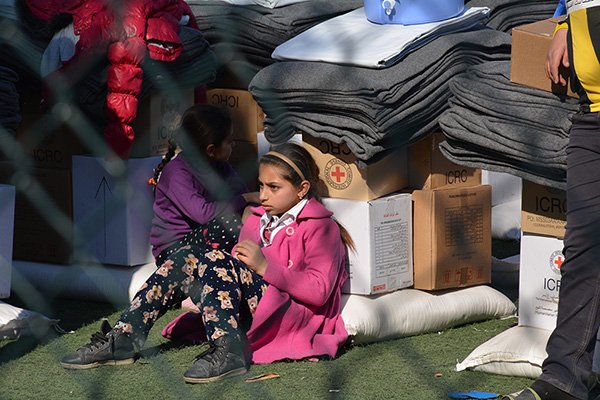
 ICRC
ICRC

 Rami
Rami